Kidnapped

Kidnapped is a novel by Treasure Island author Robert Louis Stevenson. The book is good, not great. Worth a read if you want an old fashioned adventure on the run. There are several amusing lines in the book and one very touching scene towards the end. The rest of the book is average, largely about protagonist David being dragged along a backwoods tour of seventeenth century Scotland. Although if you are someone who loves Scottish history or understands the geography of the land you will probably get a kick out of it.

The Bluest Eye

In this story Toni Morrison successfully dramatizes the damage that societal norms can have on the most vulnerable members of society (young black girls). Taking the white idea of what media portrays as normal, and twisting it. Showing a worst case scenario of what can happen when people don’t meet those “norms”. This is a bleak story (trigger warning: rape, pedophilia, animal cruelty, domestic violence, child abuse) focused on the more dismal parts of american society. The story is an uncomfortable look at systemic racism and the trickle down affect it has. It is a very interesting read and can be very eye opening, especially if you never questioned the way media impacts lives in a majority white country.

The Things They Carried

The things they carried by Tim O’Brien, is an extremely well written look into the minds of young american soldiers during the Vietnam war. O’Brien bases his main character on himself, giving him the same name and mixing in aspects from his real life, giving the story a more true to life feel. Though the story is fiction, the experiences of the characters feel very real, in many cases too real. Most people have no chance of understanding what it was like to serve in Vietnam, something O’Brien makes clear, but this book is very accessible to readers and with its use of onomatopoeia and other descriptive techniques it makes you feel like you are there with these boys. It can be hard to read, like most war stories it deals in harrowing subject matters (trigger warning: animal cruelty, suicide). If you enjoy war stories this is not one to be passed up, even if you only have a passing interest its worth reading for the excellent writing.

The Three Musketeers

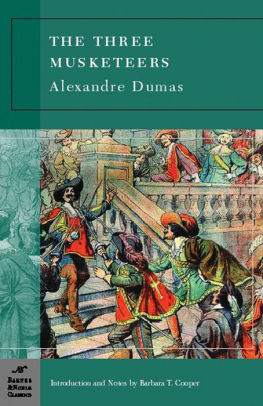
Image result for the three musketeers

If you only know the three musketeers from the movies, you likely think of swashbuckling adventure and noble heroes. If you go into the book with these expectation you will be disappointed.

Well there is adventure to be had and many humorous situations, the book is more a satire of that chivalrous noble idea. The main characters are all irredeemably terrible people and most of the plots they are involved with are shallow unimportant affairs escalated by the status of the people they revolve around. A man being suspicious his wife is unfaithful is not a serious concern but when it is happening to the king and queen and involves foreign agents it becomes something with consequences for everyone.

The story has a very ironic tone with the musketeers themselves being treated as gentlemen and respected examples, when they are thugs who are engaged in gang wars and have all done things members of a lower class would have been arrested or executed for. This is intentional and if you are a fan of satire you may find it enjoyable but for anyone just looking for a fun adventure the characters make it hard to tolerate between sword fights.

The book is very long, longer than it needs to be. Scenes will establish their point and then continue for five more unnecessary pages. Some people might not think of this as a problem if they really like the story but if you aren’t as invested it can try your patience.

The Three Musketeers does contain a fun adventure story in it but its not the focus. If you like more irony based books I recommend this. However if you were just looking to check out Dumas’s work I would suggest you read The Count of Monte Cristo instead.

The Merry Adventures of Robin Hood

The book is generally humorous, owing to the characters light hearts and quick wits. The writing style would be best experienced by having the story read to you by someone who was a talented speaker.

Robin Hood would be a good book to read to a child. It has short episodic chapters that would fit well in a bed time story arrangement. The chapters can be read out of order but, for the first reading it would be best to read the book chronologically as some stories connect to others. After the first reading you can focus on your favorite chapters if you like.

Reading this book to children would also allow for context to be added by the parent when ideas that haven’t aged well appear, as they often do in books this old. (e.g Women rarely come into play in these short stories and when they do their depiction is less than flattering. The only named female in the book has no lines and her role in the story is to stand there quietly as a group of men decide who she will marry).

The Sixth Day

The Sixth Day reads like it was written by someone who watched the news for hours, then flipped channels between a Bond movie and an episode of Mr.Robot, before glancing at a history book (not read a history book just glanced at it), then fell asleep with their head in a thesaurus and when they woke up the next day at two in the morning, they wrote the first plot that came to mind, which for some reason has vampires in it.

The Title The Sixth Day refers to the book being broken up into sections referred to as days, the first day Tuesday till the sixth day Sunday. There is no discernible reason for this. What day it is plays no part in the story nor does the fact it takes place over six days.

There are a few writing quirks, mainly in dialogue, that can make parts of the book confusing to read. The character speaking is introduced before they start talking, unlike how most books have the dialogue followed by the name of the character speaking. Characters also monologue instead of converse. They frequently ask and answer their own questions making it hard to tell how many people are talking.

The lines spoken by the characters are also very unnatural sounding. In the book a character says, “Your brains are so….limited. you see and understand so very little. Yet again, I have found that true of so many of my fellow human beings.” This line is a sample of the average dialogue. The terrible lines are the best part of this book, if you want to read it as a so bad its good book.

A gimmick this book uses is inserting historical figures into the story. My favorite is when Heinrich Himmler appears as the modern vice chancellor of Germany. He is in the story for three-and-a half pages, the only thing he does is think about how he is planning to team up with ISIS to take over Germany. Once he is done letting the reader know he is evil, he immediately dies and doesn’t effect the plot. This brings up a question that hangs over most of the historical figures, why this person? They never do anything unique to the person they are supposed to be, so they can be replaced with anyone and it wouldn’t change the story.

The actual plot of the story is just silly. It starts with a major hack on the British government, that doesn’t effect anything after the leak has been closed. Once the hacking plot line is tied up, we move to a story about a crazy person who thinks he’s a vampire, kidnapping a woman because a magic book written in twin talk (which is a real language in this story) told him to.

This book is considered a thriller, but there is nothing thrilling about it. The reader is given too much information for there to be ambiguity in how events will play out. The story can be entertaining for its terrible dialogue and bizarre story but without any tension its too boring to recommend.

A Knight Of The Seven Kingdoms

A Knight Of The Seven Kingdoms is a collection of three short stories by George R.R. Martin set in Westeros a century before Game Of Thrones. The three stories are told from the perspective of Dunk (Ser Duncan) a young hedge knight traveling in Westeros with his squire Egg.

In the three adventures the pair find themselves in a scrimmage with princes that has ramifications for the throne, a scuffle between two minor noble houses that leads Dunk to consider what it is to be honorable, and an attempt to gather support for a second civil war.

The larger scale consequences for Westeros start as smaller incidents Dunk and Egg happen into. Dunk is trying to make a name for himself as a knight and unintentionally becomes involved in events larger than himself.

The book is short three hundred and fifty five pages, a quarter of the pages are illustrations. The illustrations by Gary Gianna are nice and well detailed. The pictures usually do not take up a whole page by themselves and occasionally disrupt the flow of the text which can be distracting e.g breaking up sentences or having the text border the image. This doesn’t happen often and overall the illustrations are a good addition.

Being a collection of three stories that were originally separate, there are recaps of previous stories in second and third. With the stories being so short and close together it can be repetitive. Dunk’s internal thoughts are also repeated multiple times with the exact same wording.

A Knight Of The Seven Kingdoms is a good read for those who are looking to sample George R.R. Martin’s writing and don’t want to start with something as dense as Game Of Thrones. It also provides a look at Westeros in a time with no major wars ruled by the Targaryens. This book works as a stand alone story for those who haven’t read Game Of Thrones and would likely be an interesting prequel to those who have.

The Mortal Instruments: and other works of Cassandra Clare

The Mortal Instruments is a long running series of books beginning with City of Bones and ending with City of Heavenly Fire. It then branched off to The Infernal devices series and the Dark Artifices series, that continued the story from the original set of six books. The most recent book being Queen of Air and Darkness.

To understand the full collection of books a new reader would have to begin with The Mortal Instruments. Otherwise the new books would be confusing because the characters and a lot of the world building elements are tied to it and would be lost on readers trying to start from any other book. The only set of books that can almost stand on their own is The Infernal Devices, the story being set two-hundred years before the events of The Mortal Instruments.

The Overall series is about a secret magical society and the organization of demon hunters called “Shadow Hunters” that keep the peace between magical races and protect the world from demons invading it. With a heavy focus on the romantic lives of the books main characters. The Mortal instruments follows Clary as she is drawn into the magical world because of her unknown shadow hunter blood. The first six books are told mainly from Clary’s point of view as well as the small cast of her five friends but later books like Queen of Air and Darkness switch the point of view between more than ten main characters and every returning character from previous books. This culminates in a Return of the King style ending where every character is given their own section to wrap up their personal arch.

Cassandra Clare’s start in fan-fiction is very apparent in all of her books. She falls into many tropes associated with the genre. All her main characters are powerful, impossibly beautiful and angsty teenagers with complicated love lives. Despite all sharing similar traits the characters have enough of their own personality to be distinct from each other and are for the most part likable. Especially in later books when the cast becomes divers enough that the young readers are likely to find at least one person they can identify with.

Clare has many flaws in her writing. For one naming things is not her strong suit. Shadow Hunters being a good example, most things have names that come off as silly or awkward to pronounce. She also works the title of every book into the story and in her latest book a character says he is looking for “Annabel Blackthorn” and if that name wasn’t bad enough the other characters response is “Oh, you mean the Queen of Air and Darkness.” There is no reason in the story for her to be called that and she is never referred to by that name ever again. Dialogue and metaphors are another aspect of writing she struggles to make sound natural, all the characters speak as though they are trying to sound poetic but it comes off as humorous in places and embarrassing in others. Metaphors have the same issue where many of them are so pretentious they stop making sense if you think about them. Her latest book is also full of grammatical errors, to the point it doesn’t seem like McElderry Books employs editors.

In spite of their flaws the books are all enjoyable. If you are the sort of person who reads a lot of paranormal romance/urban fantasy book this has all the elements you likely look for in a book. The story also carries positive messages about acceptance and change. The Shadow Hunter government is slowly changed from within by the main characters to be an inclusive and helpful organization by the latest book as opposed to the first when they were almost considered to be antagonists. If you read these books they should keep you busy for a long time the shortest book in the collection is over four-hundred pages, the books are easy to read though. In the teen romance genre there are certainly worse books. With its overall positive messages and strong cast of characters I would recommend these books to any young girls intrigued by the story.

The Thin Executioner

The Thin Executioner written by Darren Shan (author of the Cirque du Freak series) is about an arrogant boy going on a journey, learning more about the world.

The story takes place in a fictional primitive society. The protagonist Jebel Rum begins his adventure when he is dishonored by his father. He goes on a quest to ask a god to grant him invincibility. Accompanied by a far more worldly slave Jebel encounters cultures outside of his perceived norm and learns to be more open minded.

The cultures Jebel is exposed to are unique and challenge different aspects of his world view. He learns that not everything he has been taught should be believed. The authorities in his life can be wrong.

This book would be most appropriate for teens. The themes can resonate with all ages but the graphic descriptions of gore make it less suitable for young children. Adults will find the writing too simplistic, almost every lesson is spelled out for the reader. It is still a very interesting and enjoyable book for adults, but it is far more at home with its target demographic. The cover art and description doesn’t entirely represent the story, it makes the story seem more like a horror gleefully reveling in violence when the story is more nuanced than that. This is a book it would be best not to judge by its cover.